One of many prevalent conditions that these kinds of firm carbon insoles can be used for are osteoarthritis with the great toe joint which often commonly gets referred to as hallux rigidus. This rigid insole works by constraining motion of the hallux joint, so that limitation of movement usually means the great toe joint is significantly less painful. One more disorder that they get put to use in is called turf toe. This is when we have a traumatic hyperextension damage with the great toe joint, so the metatarsophalangeal joint absolutely does have to be constrained from flexing for quit some time for the injury to get better and the plates are really good for this. There is also a condition named Freiberg’s disease and that is an issue with the growing portion of the joint, generally with the bottom of the second toe. This can be one of those problems that need the full plate to restrict motions throughout the front foot.
What shoes should you use these rigid carbon insoles within? A lot of people find that they’re able to wear them in pretty much any footwear as they don’t fill up much room. A lot of people find footwear which use a rocker actions being quite beneficial to wear these in. One example will be the Hoka running shoes which have a rocker under the front foot. As these carbon insoles stiffen the shoe that will help control motion to lessen discomfort, the rocker does help the foot move forwards when walking as you can not flex the foot across the ball of the foot. There are some adverse reactions from wearing the carbon plates and this has to be weighed up against the benefit from using them. They could impact the way you walk, so you may need to take time to get accustomed to them. Maybe you will need to cut back on the time period for you to put them in to get familiar with them and then begin progressively increasing the wear time period. They can be to some extent not comfortable as they do not enable ordinary foot movement, but may simply have to be accepted and balanced against the pain which may be emanating from the reason why you might have to use the insole.
]]>Commonly, it is painful under and just distal to the metatarsal joints to walk on and also when the area is palpated. When weight bearing the toe of the affected metatarsophalangeal joint is sometimes a bit elevated. There are a few distinct examinations or moves that health professionals can perform to the toe to test the integrity, function and strength of the plantar plate and also to determine just how extensive the partial tear is actually. The main cause of a plantar plate tear is not generally really apparent, however there are a variety of risk factors that do increase the possibility of getting it, however typically it is due to too much use with an excessive amount of dorsiflexion of the joint. A strange discomfort that some with this concern describe can be a feeling of their sock bunched up under the toes, however when they check out it’s just not.
The easiest way to deal with a plantar plate tear is to have the diagnosis accurate. It is obvious clinically. An ultrasound evaluation can be used to decide the magnitude with the tear and confirm the diagnosis. The typical primary therapy strategy is to use strapping for a plantar plate tear which is designed to hold the toe in a plantarflexed pose to restrict the amount of dorsiflexion with the joint when walking. A metatarsal dome which is positioned just posterior to the sore region could also be helpful to help minimize the load. A firmer or more rigid soled footwear or footwear with a rocker can also be used to help limit the stresses on the toe. Should this is done properly, this plantar plate tear should typically get better gradually. In the event it does not work then a surgical fix with the tear is usually an option.
]]>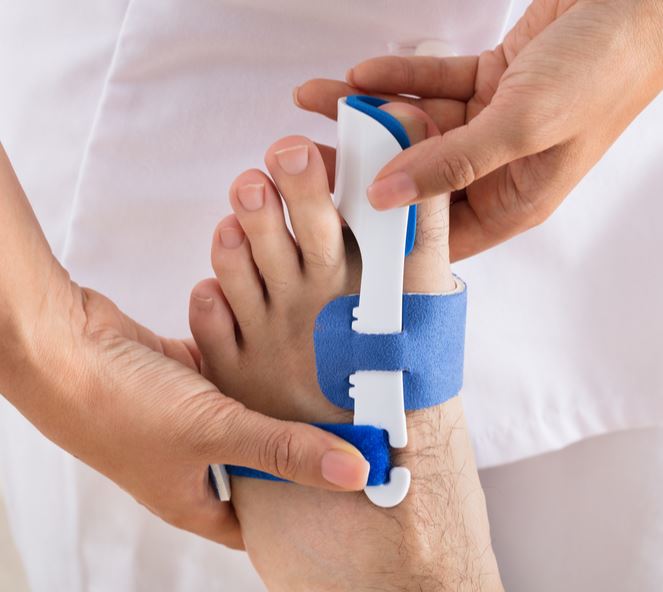
There is a lot of debate and discussion if they actually work or not. Opinion is divided and the research evidence for them is sparse. One study does show they they do help a small amount in the short term, but no research has looked at them over the long term.
The reason for the divided opinion is that a lot of force from the biomechanics and shoes during the day time goes into producing the valgus position of the toe and how can a splint just worn for the night over come that? Any good done during the night is likely to be undone the next day walking around. Obviously more research is needed to sort this put.
There is some commentary that they are still beneficial to use even if they do not correct the toe by much as they will keep the toe and joint mobile and flexible, which has to be a good thing.
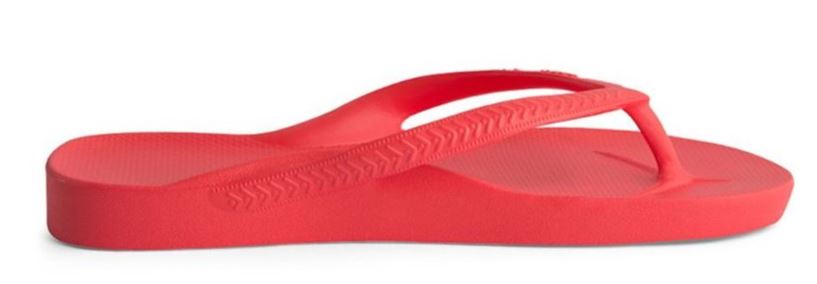
]]>They have about 2.5cm of arch support in them which is very similar to what most prefabricated or over-the-counter orthotics have in them, so they are a viable alternative or adjunct to foot orthotic therapy.
The Archies Arch Support Thongs are selling well in Australia and are highly recommended there by Podiatrists, who a lot of them use them for themselves and their families. For more on the Archies, see these links.